
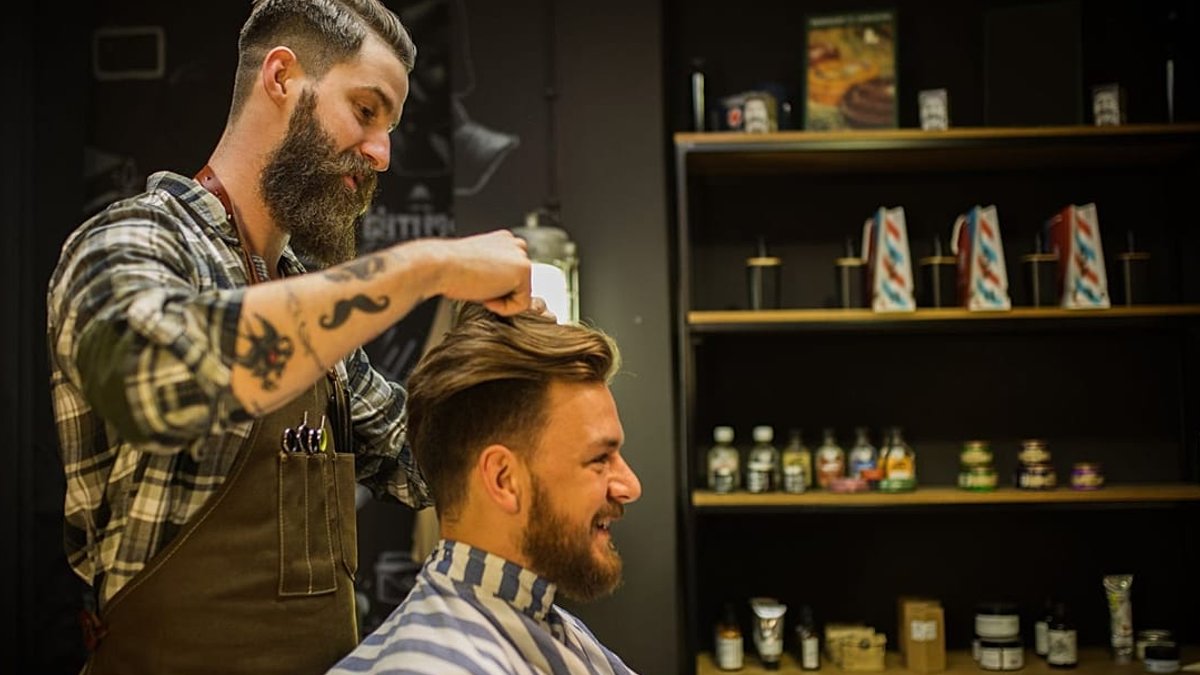
Men are finding new ways to open up about their struggles in places where they already feel comfortable. At a barbershop in Brixton, south London, owner Ben Theophanous of Curfew Grooming says clients often share details with him that they would not tell their partners or friends. The relationship is personal, yet the setting remains casual enough to lower barriers. Theophanous believes the combination of trust and superficiality creates a unique platform for these conversations.
Training barbers to listen
Curfew Grooming is one of more than 100 barbershops across the United Kingdom that have received Mental Health First Aid training through the 12th Man Campaign. The initiative started in 2013 and was founded by mental health nurse Nick Little and his late friend Oz Osborne. It takes its name from the football term for a team’s fans. The program provides support by normalising discussions about mental health in everyday environments like barbershops and tattoo studios. Employees who volunteer take an online course that teaches them how to spot signs of distress, ask meaningful questions, and direct people to professional resources.
Little emphasizes that the effort places responsibility on men to look out for their friends and family. He argues that society should trust local businesses to serve as the first line of defense. Theophanous agrees, noting that the training helps barbers act as a bridge to professional care rather than replacing it. This approach relies on volunteers and community engagement to address gaps in the broader system.
Nearly one in seven people worldwide live with a mental health condition, but men are still less likely than women to seek help. In the UK, men are three times more likely to die by suicide. Patients who do seek professional help often face long waits. Data analyzed by the charity Rethink in 2025 shows that people were eight times more likely to wait for over 18 months for mental health treatment on the National Health Service than those waiting for physical health care. Community-led initiatives are stepping in to fill these gaps with preventative measures before people reach a crisis point.
Nature as a setting for recovery
Similar programs operate across Europe. In Denmark, the Vildmandsprojektet (Wild Man) project serves as a model for nature-based rehabilitation. Co-founded by nature psychologist Simon Høegmark in 2014, the 9- to 12-week program is designed for men in crisis. Høegmark developed the concept after his own experience on a hike in Norway. He reached the summit of a mountain overlooking Lysefjord, where thoughts of jumping briefly crossed his mind. The sun broke through the clouds and revealed the environment, shifting his perspective.
That moment did not immediately resolve his crisis, but it allowed the stillness of nature to settle his thoughts and replace them with hope. Høegmark decided to investigate how nature could be professionally used for recovery. He launched the project and conducted studies to monitor its effects. One study involved 114 men who showed significant improvements in physical and mental quality of life, as well as a reduction in stress symptoms, immediately after the course and six months later.
Over eight years, around 700 men participated in the project. Since then, its Nature, Body, Mind, and Community method has been adopted by more than 50 Danish municipalities and adapted for both genders. Høegmark notes that the method strengthens participants’ sense of agency regarding their own wellbeing. He cautions that it is intended as a supplement within a health service framework, not a replacement for psychiatric treatment. The program provides an accessible format that can encourage men who are reluctant to engage with traditional services.
The role of social prescribing
Alongside local initiatives, nationwide healthcare systems have also begun looking into community-driven care as a tool to alleviate wait times. One example of this is social prescribing, which the NHS has been offering as a way to connect patients with activity groups. These can include gardening, walking, art and crafting clubs — anything that encourages reconnection with the outside world.


