
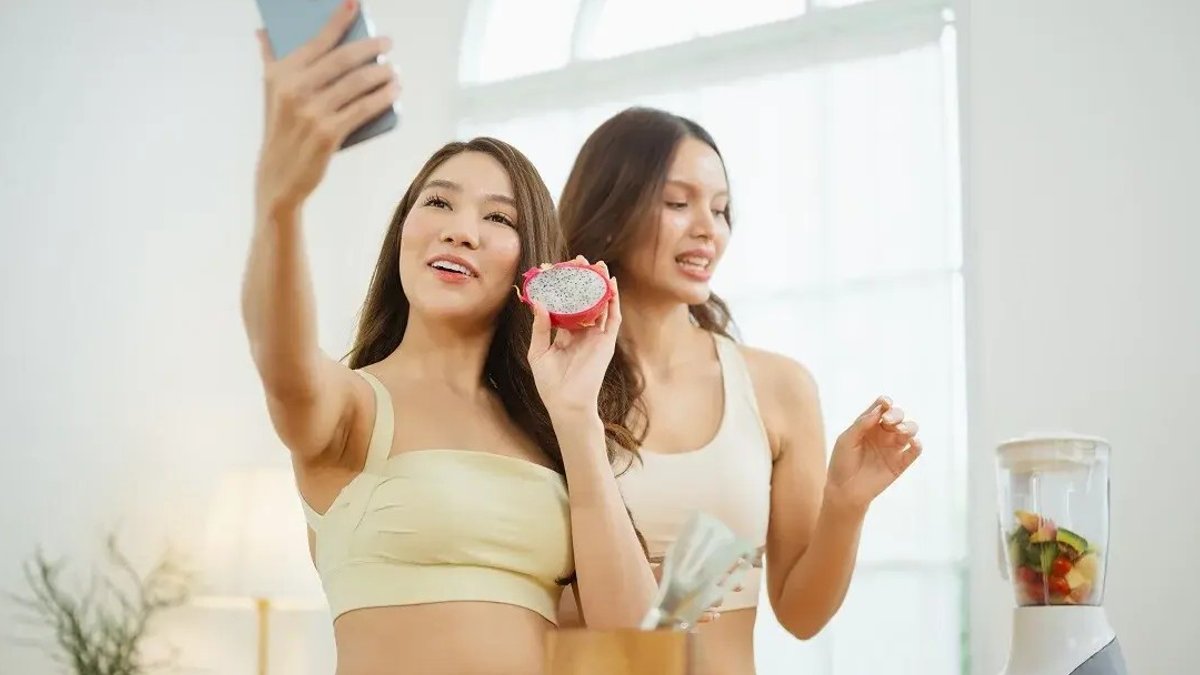
Australian researchers have found that popular wellness posts about healthy eating habits on social media often reflect attitudes and behaviors linked to orthorexia nervosa, which is an unhealthy obsession with eating foods exclusively considered “healthy” or “pure.”
Their analysis of 300 trending TikTok and Instagram posts — hashtagged #healthylifestyle, #nutrition, and #cleaneating — discovered extensive messaging promoting restrictive food rules, moralized views of food, appearance-based definitions of health, and unrealistic dietary ideals.
What is orthorexia nervosa?
“Orthorexia nervosa goes beyond an interest in healthy eating. It involves a fixation on eating the ‘right’ foods and avoiding those perceived as unhealthy,” says lead author and Flinders psychology Ph.D. student Katie Porteous.
“Many of the posts we analyzed promoted strict food rules, clean eating ideals, and the belief that health can be achieved through perfect dietary choices. Those messages closely resemble attitudes associated with orthorexia nervosa.”
Unhealthy perfectionism
The study published in Technology in Behavioral Science found that 67% of posts focused on clean or healthy eating, but almost one-third promoted food restrictions or rules, and one in five framed foods as “good” or “bad.” Moreover, nearly two-thirds featured body objectification, while many linked health directly to achieving a lean, toned appearance.
“We repeatedly saw messaging that suggested ‘if you eat like me, you can look like me,’” says Porteous. “That ignores the reality that health is influenced by many factors, including genetics, lifestyle, culture, and personal circumstances. There is no single diet that works for everyone.”
Researchers also found that unqualified influencers dominated the health content environment, accounting for 78% of creators analyzed. In contrast, content posted by qualified professionals — including dietitians, nutritionists, and exercise scientists — received comparatively less research attention.
The study authors encourage more dissemination of evidence-based information online by qualified professionals to counter the spread of harmful messages.
Related Post: New Balance SC Rebel Is a Super Shoe for Every Run
The statistic reflects findings from a separate US survey published earlier this year by Rooted Research Collective, which warned that nearly half of US citizens rely on unaccredited sources, social media, and AI-generated recommendations for nutrition advice rather than trained professionals.
In the current study, more than two-thirds of health information was classified as misleading or deceptive, while qualified health care professionals were significantly more likely to provide accurate, evidence-based advice.
Superfoods and health halos
One in three videos analyzed promoted macronutrient manipulation for aesthetic or fitness goals, particularly high-protein intake for muscle, for instance, “tips to increase protein intake to gain muscle.” “Clean” or healthy eating was highly prevalent, such as in videos promoting probiotics for gut health, while discretionary foods were rarely shown, indicating a strong skew toward restrictive dietary representations.
“Balanced messaging was limited, with few videos presenting flexible and non-restrictive approaches to eating,” write the study authors. “This suggests that healthy eating is often framed in rigid, rule-based terms, rather than as flexible, enjoyable, or socially meaningful.”
According to the analysis, three-quarters of wellness posts also promoted supplements or superfoods, often presenting them as essential to health despite limited scientific context.
International body image expert professor Ivanka Prichard, co-author of the study, says many of these messages are packaged as self-improvement advice.
“On the surface, these posts appear to promote health, but many encourage increasingly rigid and perfectionistic standards around eating,” says Prichard. “Healthy eating should be flexible, enjoyable, and sustainable. Well-being should not be defined by perfection, restriction, or appearance.”
When examining limitations, the study authors note their sample was dominated by unqualified influencers, which limited balanced comparisons between each content creator type.


