
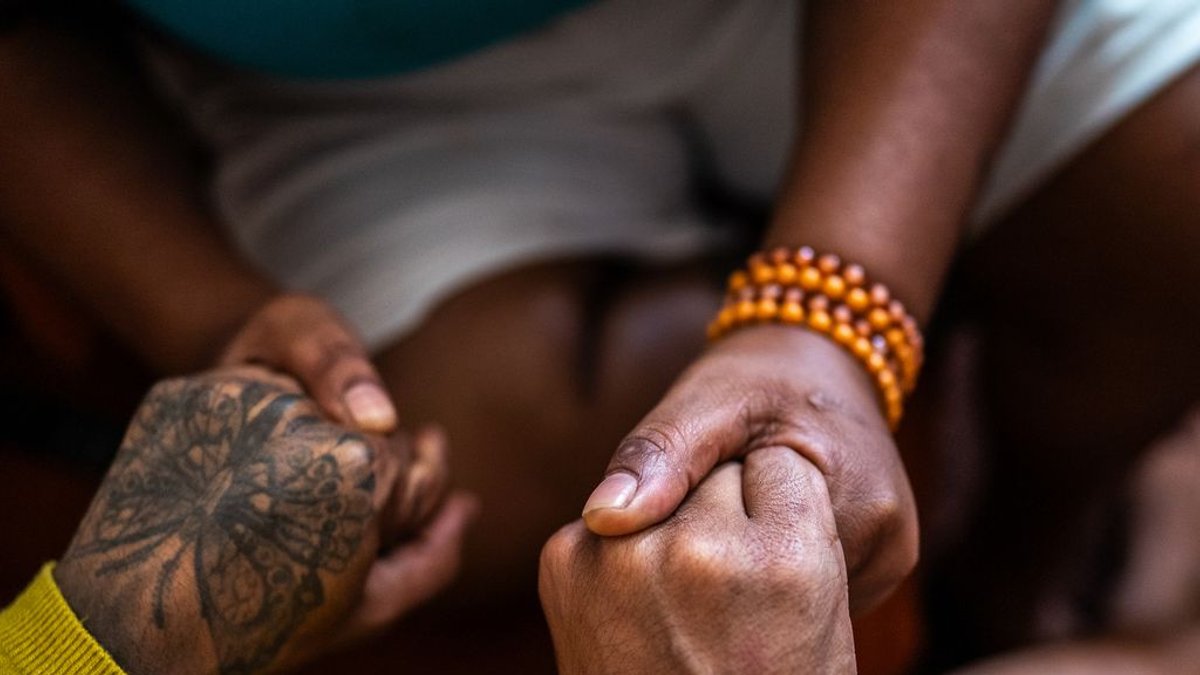
Black women receive breast cancer diagnoses at a younger median age—60, compared with 62 for white women—and face a 38% higher risk of dying from the disease. Survival rates are lowest for them at every stage. About one in five are diagnosed with triple-negative breast cancer, an aggressive form that resists many treatments.
Numbers fail to convey the full experience. For the 13 Black women who shared their stories, survival extended beyond medical care. It involved faith, community, and small acts of defiance—shaving their heads before chemotherapy or laughing in an elevator after a difficult session. Their accounts show how they rejected being reduced to statistics, instead creating their own paths through fear and pain.
Diagnoses arrive at the worst possible moments
Monique Bass, 53, discovered her lump during a late-night self-exam. A single mother of twin sons and grandmother of four, she had been consistent with annual mammograms since turning 40. Three biopsies over three years returned benign results. Doctors recommended monitoring. Bass pushed for a lumpectomy. The result confirmed stage 1 invasive ductal carcinoma, aggressive enough to require immediate chemotherapy.
She received the news while sitting in a car wash. “I felt like I was in The Twilight Zone,” she recalls. “I never expected to hear those words.” The timing was especially difficult—2020, the peak of the pandemic, and her marriage was ending. Her treatment plan included four rounds of doxorubicin, four rounds of paclitaxel, and 21 radiation sessions. Losing her hair was the hardest part. “The silver lining was that it grew back even fuller afterward,” she says.
Her faith became her foundation. “I’m not deeply religious, but I believe in God, and I knew I was in good hands,” Bass explains. After recovery, she launched What’s Behind the Bra?, a New Jersey nonprofit that provides comfort care packages to breast cancer patients and hosts a weekly podcast.
Finding power in asking for support
Jaqueline Beale, 64, comes from a family with a history of cancer, including her mother. At 40, she found a lump during a self-exam. A sonogram and mammogram showed no concerns, but something felt wrong. A biopsy confirmed breast cancer. The radiologist called while she was hailing a cab in New York. “I’m in New York trying to get a taxi, but you have breast cancer,” he said. Beale laughed despite the news.
“I made sure to surround myself with laughter and love,” she says. After a chemo session, she laughed in an elevator when someone joked about her having “a little bit of cancer.”
These women’s experiences reveal a troubling pattern: Black women often face delays in diagnosis, either because providers dismiss their concerns or because systems weren’t designed with them in mind. Yet their stories also demonstrate how community—through faith, family, or advocacy—becomes essential. For many, the battle against breast cancer wasn’t just about survival; it was about reclaiming control in a system that often overlooks them.
Judy Fambrough-Billingsley, 75, had always been active—walking three miles daily, swimming laps, and playing soccer for 30 years. When she felt a lump, she ignored it. A clear mammogram earlier that year reassured her. But when the lumps grew, she returned. The diagnosis shocked her. “I had never been part of a world where illness existed until now,” she says.
Related: Sorry, you have been blocked
A lifetime of resilience carried her through. Raised during the Civil Rights Era, the daughter of a Black entrepreneur, she had spent her life handling systems that excluded her. “Growing up in that era taught me to keep fighting,” she says. That same determination now guides her through breast cancer.
Taylor Johnson was nearly 30 when she found her lump. Doctors told her she was too young for a mammogram. She insisted on a biopsy. The result confirmed stage 2 triple-negative breast cancer. “I paused deeply, trying to process what my doctor said,” she recalls. “Then it hit me, and I cried.”
She remains in treatment—six months of chemotherapy, followed by surgery and radiation. The hardest part wasn’t the physical strain; it was losing control. “I was always the strong one,” she says. Her five-year-old daughter was watching. She held herself together not because it was easy, but because she understood what her daughter was learning. Weekly prayer calls, family visits, and a supportive medical team at Mayo Clinic in Arizona helped her endure.
Strength takes new forms after cancer
For Jessica Ncube, 41, a licensed clinical social worker and co-owner of a mental health practice, strength had always meant being there for others. Her diagnosis came quietly—a routine mammogram, no symptoms. “You hear the words, but they don’t sink in immediately,” she says.
After a lumpectomy and unclear margins, she chose a double mastectomy with reconstruction. “Losing a part of your body, even when it saves your life, is still a loss,” she says. The hardest part was learning to hold both gratitude and grief. “Strength stopped being about holding everything in and started being about honesty,” Ncube explains.
Her faith and community helped, but she also had to unlearn old habits. “As a Black woman, resilience is almost ingrained in us,” she says. “I had to learn to balance that with gentleness.” After treatment, her definition of strength shifted entirely. “Strength today is gentleness. It is honesty. It is allowing myself to receive, to rest, and to not have all the answers.”
Ameiko Newman, 40, didn’t learn of her diagnosis through a screening. She was rushed to the hospital for abdominal pain and discovered she had breast cancer. In an unexpected way, the diagnosis gave her focus. “Cancer saved me,” she says. “It made me a better person.”
Still in treatment, she has rebranded her business to support other cancer patients, designing scarves with chemotherapy in mind. “I started making them mainly for Black women because we love style,” she says. Her message to others: “Cancer doesn’t define you. You define yourself.”
Charlotte Connor, 38, found her lump after a breast augmentation. Doctors weren’t concerned—she was only 30. A year later, the lump had tripled in size. The diagnosis confirmed stage 2A ductal carcinoma. “When they told me, I was calm,” she says. Her mindset shifted to optimism, partly for her young daughter. “I couldn’t be negative; I had to be strong for her,” she says.
Related: User Notification Account Access Denied After Block
A head-shaving party with friends before chemo helped. “Making things fun like that got me through my darkest moments,” she says.
The fight often feels endless.
Donna Culmer, now 73, was diagnosed in 1999. A Navy instructor, married to a Marine, and raising three children, there was never a convenient time for cancer. But her community refused to let her face it alone. Her father drove her to every chemo session. Her church held services at her home. “As Black women, we’ve faced challenges our whole lives,” she says. “This was just one more.”
Patricia Fox, 38, was 26 when she found a lump. Doctors dismissed it as a cyst—she was young, with dense breasts. She insisted on a biopsy. The result confirmed stage 2A estrogen receptor-positive breast cancer. “Patricia, you’ll be a breast cancer survivor,” her doctor told her. That set her mindset. “It made me believe I could face this and survive,” she says.
Therapy helped her process the diagnosis. “Talking to a therapist helped me examine parts of my life that weren’t healthy,” she says. In the Black community, therapy is often stigmatized, but Fox has made it her mission to change that. “Therapy gave me strength to get through cancer,” she says. “I tell everyone they don’t have to suffer alone.”
Annette Colden, 63, promised her sister, who was dying of breast cancer, that she would get her mammograms. Her first two were clear. The third showed a spot, but her doctor said it wasn’t cancer. A year later, they found stage 0 breast cancer. “Now, I always tell women that if something doesn’t feel right, get a second opinion,” she says.
Colden turned to prayer. After recovery, she joined a support group at Roswell Park Full Cancer Center, offering the same comfort to others. Sometimes that means answering calls at 3 a.m. when chemo pain strikes. Other times, it means sending meals to patients too weak to leave home.
Ricki Fairley, 69, was 55 when she received her diagnosis—stage 3A TNBC, one of the most aggressive forms. Black women are nearly three times as likely to develop it. Her first thought: “I don’t have time for this.” But the diagnosis changed her. “It made me realize I needed to remove all the ‘cancers’ from my life,” she says. She quit her job, started a company, filed for divorce, and sold her house. “I left my old life behind and started fresh,” she says.
A year later, she was diagnosed with metastatic breast cancer and told she had two years to live. After switching to a doctor with more experience treating TNBC, she overcame it a second time. “I remember sitting at my daughter’s graduation thinking, I made it. What’s next?” she says. The answer was advocacy. She cofounded The Black Breast Cancer Alliance, working to reduce mortality rates for Black women.


