
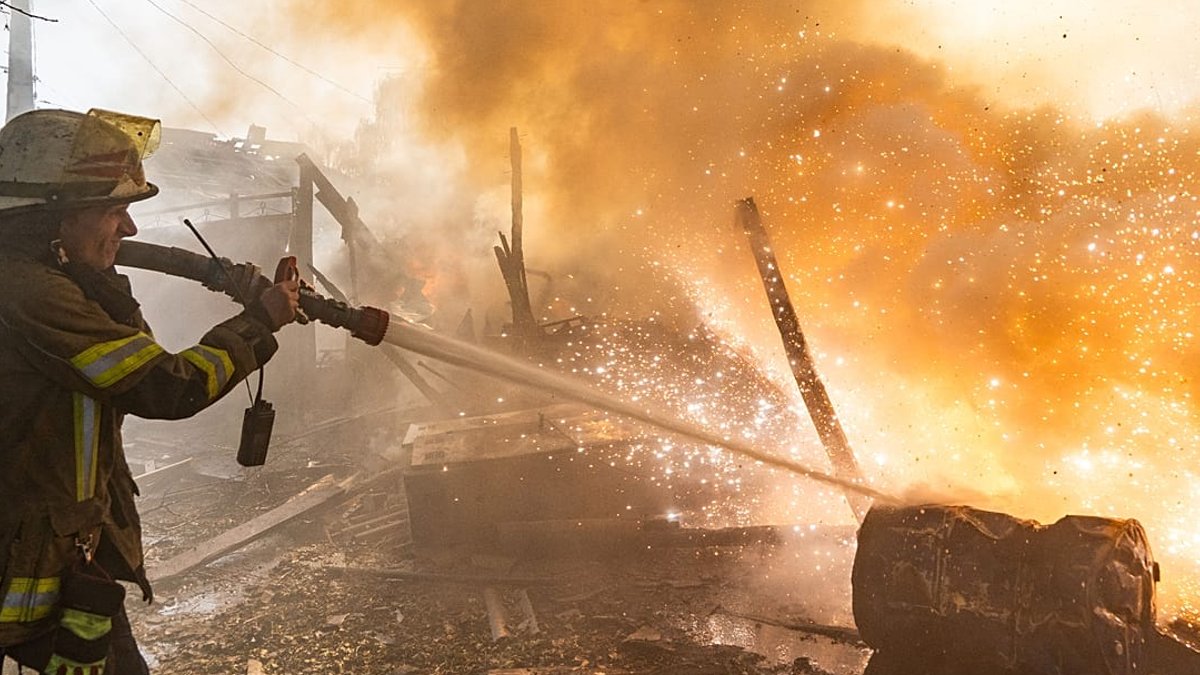
US President Donald Trump announced an “energy ceasefire” between Ukraine and Russia on Sunday, a move that sparked confusion in Kyiv and drew silence from Moscow. The declaration came amid ongoing Russian strikes on Ukrainian energy infrastructure, including attacks on power plants in Kyiv and Kharkiv that caused outages and prompted outrage from Ukrainian officials.
“Effective immediately, there is an ENERGY CEASEFIRE in the War between Russia and Ukraine,” Trump wrote on Truth Social. “Both parties have agreed. Do not break it!” Ukrainian President Volodymyr Zelensky expressed surprise at the announcement but stated Ukraine supports the ceasefire, emphasizing that Russia must also honor it. However, Russia has not confirmed the agreement.
Zelensky later reported that Russian drones, identified as Iranian-made “shaheds,” struck multiple Ukrainian power stations throughout the day, exacerbating energy shortages in a nation already reeling from years of infrastructure attacks. Since Russia’s full-scale invasion began in 2022, Kyiv has targeted Russian oil refineries in retaliation, citing the need to fund its defense efforts.
Read Also: Europe plans own astronaut launches
The ceasefire announcement followed Trump’s earlier decision to ease US sanctions on Russian diesel, a move that drew sharp criticism from European allies and Kyiv. Seven US senators, including four Republicans, condemned the diesel deal as illegal, while Canadian Prime Minister Mark Carney stated it contradicted efforts to achieve peace in Europe. Zelensky called the decision “a weak decision,” and tensions between Trump and the Ukrainian president have escalated in recent days.
Trump suggested on Saturday that Ukraine needs a “new president” to end the conflict, a claim Zelensky rejected during an ABC News interview, stating it is up to the Ukrainian people to choose their leader. Zelensky proposed a 60-day total ceasefire to allow for elections, framing it as a path to stability. His call received backing from key Western allies, including the UK, France, Canada, and the European Commission, on Sunday.
EU chief Ursula von der Leyen publicly supported Zelensky, praising his leadership in defending Ukraine’s freedom. Germany’s foreign minister, Johann Wadephul, affirmed Berlin’s continued support for Kyiv, stressing that European stability requires unwavering commitment to Ukraine. French President Emmanuel Macron also endorsed a “real energy ceasefire,” noting Russia’s recent intensification of attacks on Ukrainian infrastructure as evidence of its refusal to negotiate in good faith.


