
The International Association of Athletics Federations (IAAF) began ratifying these times in 2004, but not every fast time counts. Some races are disqualified because the course has too much net elevation drop or the start and finish are too far apart.
The Elite Elite
Women’s records have dropped faster than men’s in the last two decades. Letensebet Gidey of Ethiopia holds the top spot with a 62:52 finish in Valencia in 2021, clocking a 4:47.7 mile pace. Agnes Ngetich of Kenya followed with a 63:04 in Valencia 2024, and Fotyen Tesfay of Ethiopia posted a 63:21 in the same year.
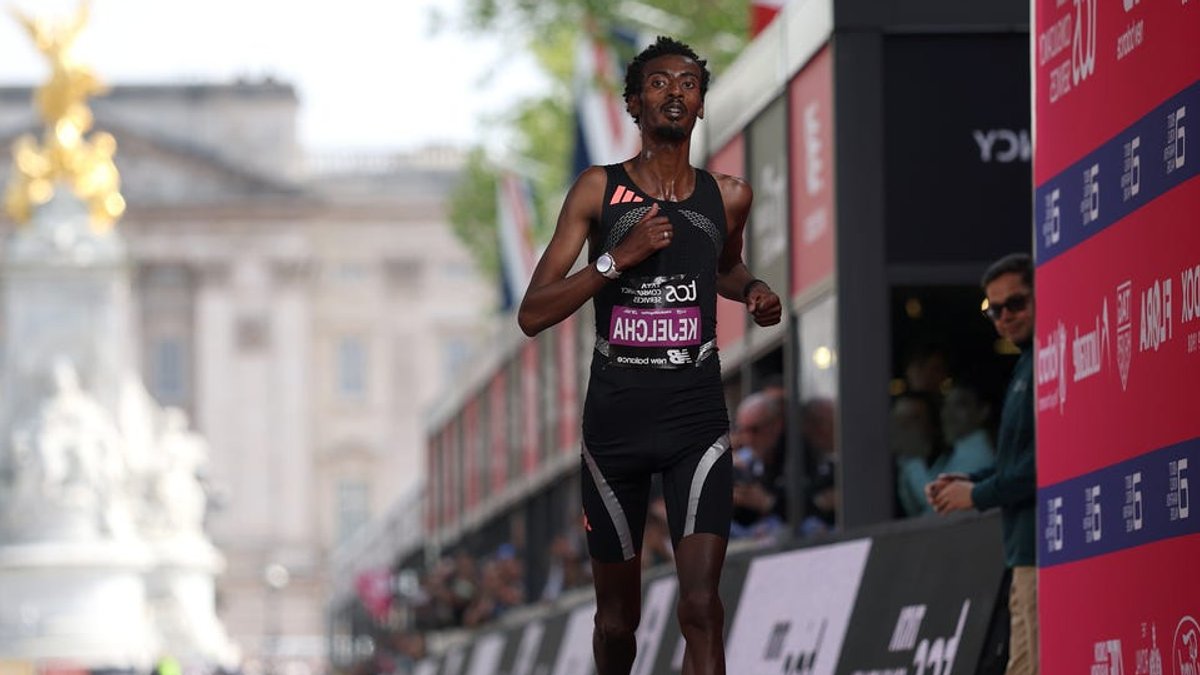
On the men’s side, Yomif Kejelcha of Ethiopia has dominated. He ran 56:51 in Buenos Aires in 2026 to claim the fastest time ever recorded. Jacob Kiplimo of Uganda is right behind with a 57:20 in Lisbon 2026, followed by Kibiwott Kandie of Kenya at 57:32 in Valencia 2020.
For the United States, the women’s list is led by Weini Kelati, who ran 66:04 in Barcelona 2026. Keira D’Amato (66:39, Gold Coast 2023) and Emily Sisson (66:52, Houston 2023) round out the top three. On the men’s side, Conner Mantz holds the top American spot at 59:17 in Houston 2025, followed by Alex Maier at 59:23 in Houston 2026.
How Fast Are They Really?
Looking at the progression of world records since 2004 reveals a steady decline in times. Women’s records have dropped from the 66-minute range to the 62-minute range, while men’s have fallen from the 59-minute range to the 56-minute range. The current records are a product of consistent training and international competition.
Related: Women hide weight loss drugs from partners
It is easy to look at these numbers and assume the sport is reaching a plateau. However, the data suggests otherwise. The margins between the top athletes are incredibly small, often measured in seconds. This level of precision requires not just speed, but absolute perfection in execution.
Record-eligible courses are the standard for these statistics. Minimum run distance to start marathon training requires specific conditions. This means that the fastest times often come from races specifically designed to be fast, like the Valencia Marathon Half or the Ras Al Khaimah Half Marathon. Runners in these events have a clear advantage over those competing in standard road races with neutral terrain.
The Next Generation
Several of the athletes on these lists are in their prime. Yomif Kejelcha is a relative newcomer to the half marathon distance, yet he already holds the world record. This suggests there may be more room for improvement in the coming years as he adapts to the 21.1-kilometer distance.
Similarly, Jacob Kiplimo has moved from the track to the road with immediate success. His ability to maintain a sub-58-minute pace over a half marathon indicates a rare combination of raw power and endurance. The competition for these top spots is fierce, with athletes from Ethiopia and Kenya consistently setting the bar.
For American runners, the gap to the world leaders remains significant but is closing. The recent performances by Keira D’Amato and Conner Mantz show that American distance running is competitive at the highest level, even if the world records are held by international athletes.


