
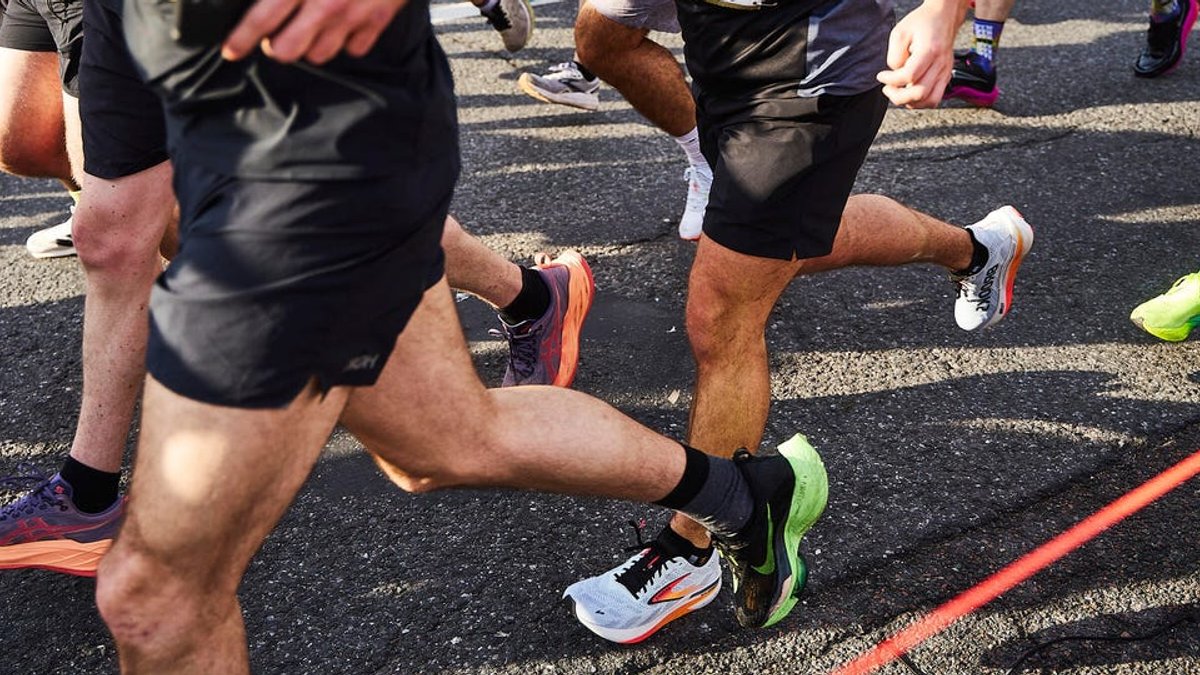
Runners often admit to skipping bathroom breaks or dealing with painful chafing, but few are willing to discuss walking during a workout. The run/walk method involves adding planned intervals of walking to a run, a strategy that helps manage fatigue and can improve finish times for many athletes. Marc Burget, a 52-year-old ultramarathoner and Florida’s 2025 Ultrarunner of the Year, exemplifies the method’s effectiveness. He won the 2025 Pinellas Trail Challenge 46-miler in 5:48:19, finishing more than 20 minutes ahead of the second-place competitor.
Related: Run Coaches Reveal $300 Spending for Better Running
Runners often believe the run/walk method is only for beginners or those aiming for a slow pace. However, the strategy is widely used across fitness levels and ages. Chris Twiggs, chief training officer and national program director of Galloway Training, tells Runner’s World that the method is not limited to novices. Ultrarunners, who make up less than 1 percent of the American running population, frequently employ these intervals to maintain performance over long distances. Burget, an experienced ultrarunner, has refined his approach over time, alternating between three minutes of running and 30 seconds of walking or running 0.3 miles followed by a 30-second walk.
Another common belief is that walking limits a runner’s potential to achieve faster times. Proponents argue that the opposite is true. By walking, a runner can maintain a higher heart rate during their run intervals, allowing for faster speeds than a steady-state run. To average an 8:00-minute mile, a runner might run at 7:40 pace for nine-tenths of a mile before walking for 30 seconds. This approach ensures the overall pace remains on target without causing the runner to burn out before the finish line.
Related: Runner’s World Guide to Sports Nutrition and Fueling
Runners frequently worry that taking walk breaks will prevent them from racing longer distances or competing in specific events. Research and anecdotal evidence suggest that walking can actually extend a runner’s capabilities. By reducing muscle pain and fatigue, the method allows athletes to tackle races they might otherwise avoid. Burget, an official Galloway Pacer and Florida’s 2025 Ultrarunner of the Year, tells Runner’s World that putting walks in his race plans allows him to go the whole 100 miles without becoming tired.


