
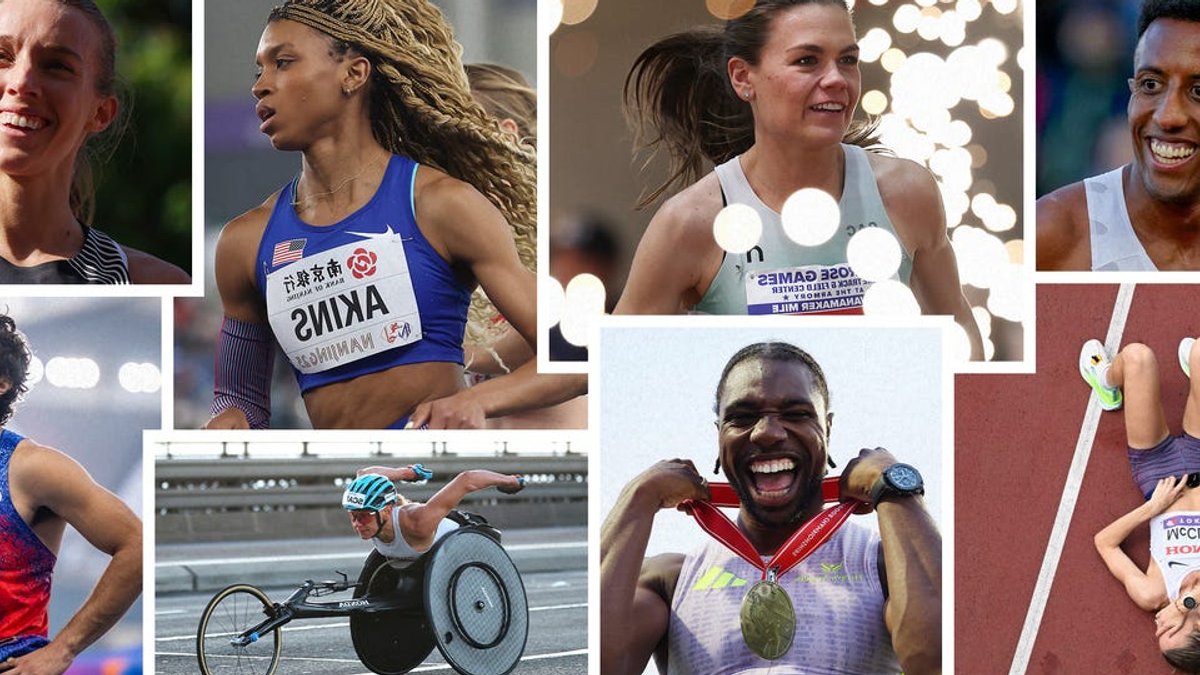
Top U.S. runners rely on short, repeatable statements to keep focus when training or racing becomes grueling, a practice that blends sports psychology with personal belief.
Mantras that keep elite athletes on track
Ezra Frech, a Paralympic high‑jump champion, credits the line “I’m the world champion” with pulling him through a disappointing finish in Tokyo and onto a world‑title podium a year later.
Noah Lyles repeats “I’m going to win” before every sprint, a habit he formed at the 2016 Olympic Trials and still uses at the Paris Games, where he captured gold and bronze medals.
Emily Sisson visualizes herself as “the eye of the storm” to stay centered amid the noise of major championships; the phrase helped her claim the 10,000‑meter title at the 2021 Olympic Trials.
Emily Venters fills in the blank with “I am …” to match her mood, ranging from “strong” to “fearless.” The phrase is even tattooed on her ankle, a reminder that a simple statement can shape mindset.
Clayton Young whispered “You belong” as he entered the marathon start line in Paris, and later heard his wife shout the same words from the crowd, keeping him present through the race’s toughest mile.
Josette Andrews writes “Why not me?” at the top of her phone notes before a race, a cue that steadied her confidence during a World Championship 5,000‑meter final.
Related: Fiber Training for Better Health
These short phrases, often five words or fewer, act as mental anchors that redirect attention from fatigue to purpose.
Scripture and verses that fuel determination
Some runners incorporate scripture or memorized verses into their mental preparation, using the words as cues that align with their personal faith and reinforce focus during competition.
While the specific wording varies, the underlying principle is the same: a concise, present‑tense statement can reinforce confidence and reduce mental chatter. Athletes often rehearse these lines daily, turning them into a part of their identity as much as their training schedule.
For newcomers to the sport, understanding why such language matters can be helpful. The brain responds to repeated, positive cues by strengthening neural pathways associated with self‑efficacy. When an athlete hears a trusted phrase at a critical moment, the cue can trigger a physiological response—lower heart rate, steadier breathing—that supports better execution. This effect, documented in sports‑psychology research, explains why coaches encourage athletes to craft personal mantras that align with their goals.
The cue works.
These personal mottos, whether secular or scriptural, illustrate how mental framing can influence race outcomes. By turning abstract confidence into concrete language, athletes create a mental toolkit that can be accessed in the split‑second decisions that define elite competition.


