
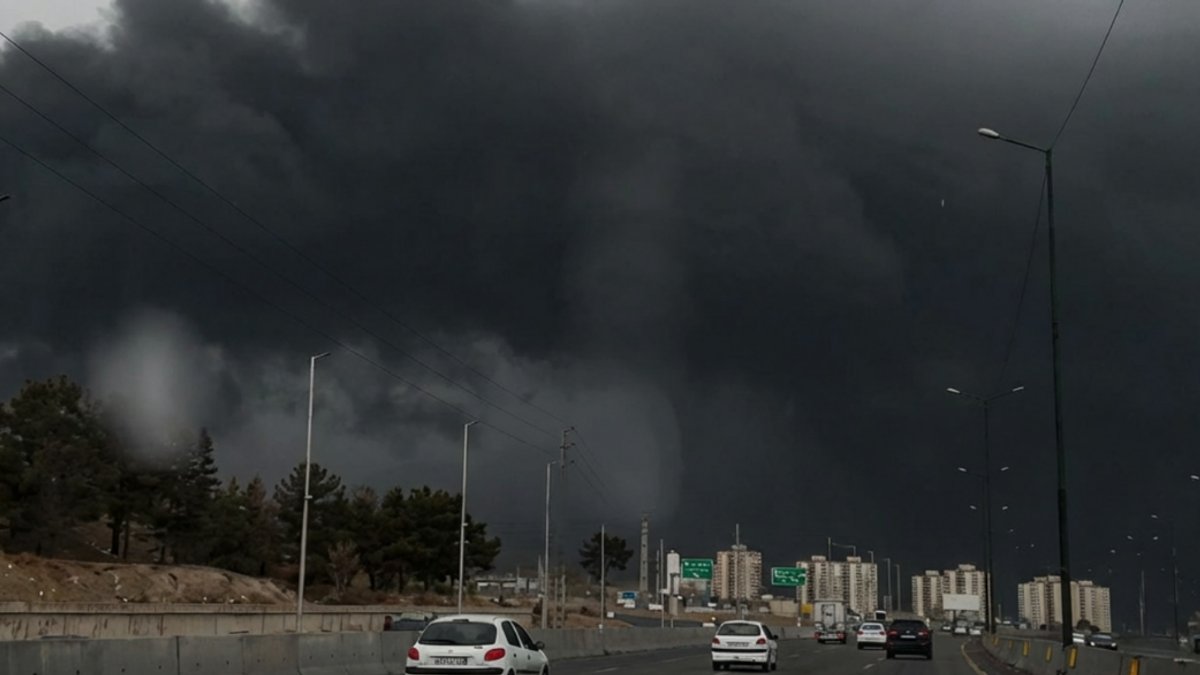
The World Health Organization’s director-general warned on March 10, 2026, that damage to petroleum facilities in Iran could contaminate air, food, and water. This warning came after residents in Tehran reported black rain following airstrikes on fuel sites around the capital.
The strikes, which occurred overnight into March 8, 2026, targeted multiple oil storage facilities and a petroleum transfer center in Tehran and nearby Alborz. Four tanker drivers were killed in the attack on the transfer center, according to the Fars news agency. Israel stated that the facilities were used for military infrastructure.
Black Rain and Health Concerns
By Sunday morning, thick smoke had spread across Tehran, with a video posted on X showing the capital under a dense smoke plume. CNN correspondent Frederik Pleitgen reported oil rain falling across the city after the strikes. Residents described dark, oily rain on streets, cars, and rooftops, with the air being difficult to breathe.
Iran’s Red Crescent Society warned that chemicals released by the explosions included hydrocarbon compounds, sulfur, and nitrogen oxides, stating that any resulting rainfall could be “extremely dangerous and highly acidic.” Iranian authorities urged residents to remain indoors.
Rainfall Reports and Limitations
Reports of oil rain in Tehran rely heavily on resident accounts, Iranian official warnings, and secondary media sources. No laboratory data or direct WHO technical findings confirm the rainfall’s composition. This limits understanding of the health claims’ scale.
WHO Warnings and Regional Impact
The WHO’s warning on March 10 highlighted the risks to children, older people, and those with pre-existing medical conditions. This followed a March 5 briefing, where the WHO stated that the wider conflict was putting health systems and lives at risk across the region.
As of March 5, 2026, the WHO reported nearly 1,000 deaths in Iran and had verified 13 attacks on healthcare facilities in the country, with one in Lebanon. A regional statement cited over 925 deaths, more than 6,100 injuries, and 14 attacks on healthcare in Iran since February 28, 2026.
Uncertainties and Expert Opinions
Iran’s deputy health minister claimed that soil and water supplies around Tehran were being contaminated by fallout from the explosions, though this has not been independently verified.


