
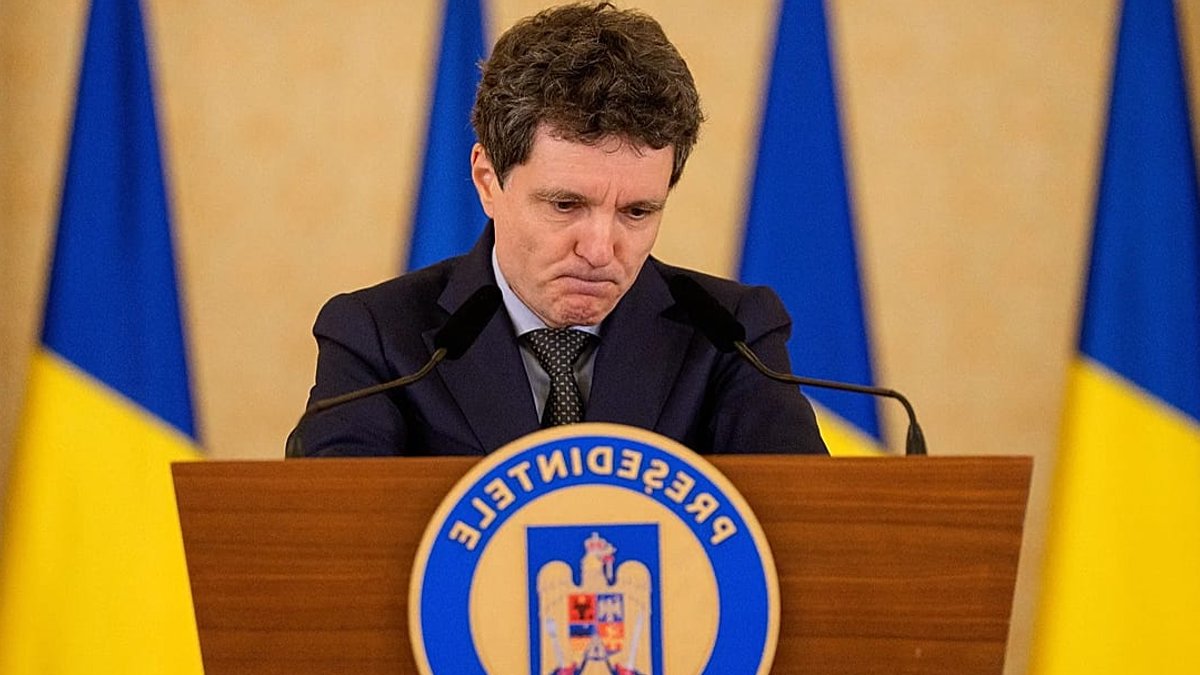
Romania’s president has urged deeper NATO engagement in the Black Sea following a surge of drone strikes on merchant vessels near its coastline, emphasizing that instability in the region will endure until Russia’s invasion of Ukraine concludes.
President Nicușor Dan told Euronews that unauthorized drone flights into Romanian airspace began roughly a year and a half ago, catching the country off guard in its defense planning. Those same vulnerabilities now threaten Black Sea shipping routes, which have faced repeated interruptions. “At the Black Sea, we are in the same situation,” he said, adding: “We have to protect the water under our territory.” He also expressed confidence in continued support from US President Donald Trump, both for security in the Black Sea and for Romania’s position within the NATO military alliance.
Dan’s comments followed three consecutive days of drone attacks targeting ships off Bulgaria and Romania, including a strike last week that sank one vessel and killed two crew members. Neither government has publicly accused Russia, though Bulgarian Prime Minister Rumen Radev suggested Moscow may benefit from the attacks. “The problem is that we cannot prove it,” he said. Investigations into all the incidents are ongoing.
Romania’s warnings have raised Black Sea security to a priority on the EU’s agenda. Dan highlighted France’s commitment to providing necessary equipment and better understanding Romania’s specific requirements in the Black Sea. A meeting with NATO Secretary-General Mark Rutte centered on strengthening counter-drone defenses. Rutte confirmed NATO would bolster its eastern defenses, including through improved surveillance and rapid-response systems.
Ukrainian President Volodymyr Zelenskyy reinforced concerns about Russia’s use of proxy attacks to test European defenses without direct confrontation. “You do not need a ground war for an invasion to occur,” he said, pointing to recent strikes in Romania, Poland, and Germany. Zelenskyy added that Russia was testing Europe’s response to the attacks, referring to incidents in the Black Sea as well as an explosive-laden drone found at an airport in Leipzig.
The Black Sea’s escalating tensions stem partly from Russia’s blockade of Ukrainian ports, which has disrupted global grain shipments and forced Europe to reroute cargo. The region’s instability has exposed weaknesses in NATO’s ability to track and neutralize drone threats. While Dan expressed confidence in allied support, he stressed that unresolved hostilities in Ukraine would keep risks alive.
Romania’s advocacy for expanded NATO oversight aligns with broader anxieties among Black Sea nations about rising security threats. Though France and NATO have pledged assistance, the absence of conclusive proof linking Russia to the attacks has hindered efforts to secure stronger collective responses.


